

Stem Cell and Exosome Therapy for Inflammatory Bowel Disease (IBD)
Stem Cell Therapy Offers Healing From Within
At Rejuve Anti-Aging, we often hear from patients around the world asking whether regenerative therapies can make a difference for those living with Inflammatory Bowel Disease (IBD), including Crohn’s disease and ulcerative colitis. The answer? They absolutely can.
Traditional treatments for IBD—like steroids, biologics, or immunosuppressants—can help manage flare-ups and reduce inflammation, but they do little to repair the damage already done to the digestive tract. These approaches often focus on controlling symptoms rather than restoring healthy tissue or promoting long-term healing.
Regenerative medicine is changing that story. Stem cell therapy offers a groundbreaking approach for IBD, targeting the underlying immune imbalance, reducing inflammation, and supporting the repair of damaged gut tissue. This therapy has the potential to relieve pain, improve quality of life, and even help some patients achieve sustained remission. There is hope, and we’re here to guide you toward it.

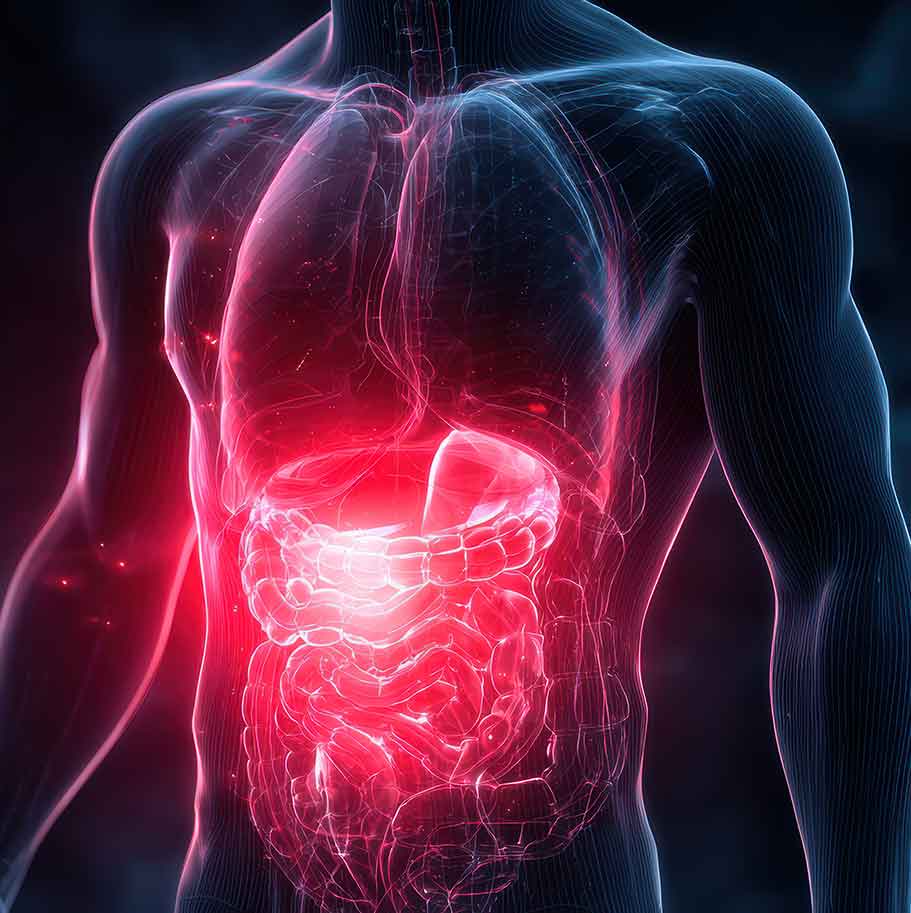
Struggling with IBD symptoms? Call (949) 787-9800 For Help Today!
A Regenerative Approach That Works
Inflammatory Bowel Disease (IBD), including Crohn’s disease and ulcerative colitis, can be life-altering conditions that disrupt daily living and are often resistant to traditional medications. Many patients struggle with recurring flares, painful inflammation, and long-term complications even after exhausting conventional treatments. That’s why so much excitement is building around stem cell therapy—a groundbreaking approach that goes beyond simply managing symptoms to target the underlying cause of IBD.
Stem cell therapy harnesses the power of mesenchymal stem cells (MSCs) to calm the overactive immune system, reduce chronic inflammation, and promote healing within the gut. Unlike medications that often come with harsh side effects, stem cells work naturally with your body to restore balance and encourage long-term remission. Clinical studies have shown remission rates as high as 50–80% in patients with difficult-to-treat Crohn’s and ulcerative colitis, with many experiencing improved quality of life and lasting relief. At Rejuve Anti Aging, we bring you access to the latest in regenerative medicine—offering a therapy that doesn’t just mask your symptoms but helps rebuild your health from the inside out.
How Stem Cell Therapy May Help With Lupus
Immune System Modulation
Mesenchymal Stem Cells (MSCs), can help “reset” an overactive immune system, which is the root cause of inflammation in IBD. By calming the immune response, they reduce ongoing attacks on the gut lining, preventing further damage.
Tissue Repair & Regeneration
MSCs release growth factors that promote the repair of damaged intestinal tissue. This can help restore the lining of the gut, improve nutrient absorption, and strengthen overall digestive function.
Reduction of Inflammation
MSCs (mesenchymal stem cells) have natural anti-inflammatory properties. They reduce swelling, redness, and pain in the gut, helping alleviate flare-ups and improve overall comfort.
Fistula Healing & Complication Support
For patients with perianal fistulas or other IBD complications, localized stem cell therapy has been shown to promote closure and healing, offering solutions where traditional therapies often fall short.
What Is Stem Cell Therapy
Stem cell therapy is an innovative medical treatment that harnesses the regenerative potential of stem cells to repair, replace, or regenerate damaged tissues and organs. Stem cells are unique because they can differentiate into various cell types and multiply indefinitely, making them essential in regenerative medicine and tissue engineering.
Promotes Natural Healing:
By stimulating tissue repair and regeneration, stem cell therapy addresses the root cause of many conditions, supporting the body’s natural healing processes.
Minimally Invasive Procedure:
Typically administered through injections or infusions, stem cell therapy involves minimally invasive techniques, reducing risks and ensuring a faster recovery.
Personalized Treatment Plans:
Each therapy can be tailored to meet individual patient needs, considering their medical history and treatment goals for more targeted outcomes.
Potential for Long-Lasting Results:
While outcomes vary, many patients experience significant and lasting improvements in symptoms, function, and overall quality of life.
See What Studies Have Shown
Inflammatory Bowel Disease (IBD), including Crohn’s disease and ulcerative colitis, is a chronic, inflammatory autoimmune condition that affects the digestive tract and can significantly disrupt daily life. Because IBD involves both an overactive immune system and ongoing tissue damage caused by inflammation, the most effective treatment would need to address both aspects simultaneously: regulating immune function while also repairing and regenerating damaged intestinal tissue. Achieving this dual effect is essential for providing meaningful, long-term relief.
Stem cell therapy offers a unique solution, as it not only helps restore balance to the immune system but also promotes healing and regeneration of the gut lining. This comprehensive approach targets the underlying causes of the disease rather than simply controlling symptoms.
Clinical studies and patient experiences have already shown promising results, with many individuals experiencing reduced inflammation, improved digestive function, and a better quality of life following stem cell therapy for IBD.
| Study / Approach | Patients | Response / Remission Rates | Follow-up | Main Improvements | Notes |
|---|---|---|---|---|---|
| Mesenchymal Stem Cells (Crohn’s, refractory) – Panés et al., 2016 (ADMIRE-CD trial) | n=212 | 50% clinical remission at 24 weeks vs 34% placebo | 24 weeks | Perianal fistula closure, reduced drainage | Phase III RCT, adipose-derived MSCs |
| Allogeneic BM-MSCs for refractory Crohn’s – Ciccocioppo et al., 2011 | n=15 | 80% clinical response, 53% remission | 12 months | ↓ CDAI, mucosal healing | Open-label pilot, BM-MSCs IV |
| UC-MSCs for Ulcerative Colitis – Liang et al., 2012 | n=82 | 47.5% clinical remission vs 20% controls | 3 months | Improved Mayo score, reduced inflammation | Randomized controlled, UC-MSCs IV |
| Systematic Review / Meta-analysis (de la Portilla et al., 2020) | 10 trials, >600 patients | ~60–65% fistula healing rate | Varied (6–12 months) | Fistula closure, improved QOL | Adipose- and BM-MSCs both effective |
| HSCT for refractory Crohn’s – Burt et al., 2010 | n=24 | 91% remission at 1 year, ~19% relapse at 5 yrs | 5 years | ↓ CDAI, steroid-free remission | Autologous HSCT; high risk, reserved for severe cases |
Stem Cell Technology
Harness the power of cutting-edge regenerative science. Stem cells have the unique ability to transform into any type of cell your body needs, promoting natural healing and cellular repair at the site of application. As the foundation of regenerative medicine, these powerful cells adapt to your body’s needs, accelerating recovery and restoring function.
Ethical Sourcing and Screening
Specimen Collection
Advanced Processing Standards
Why Choose Us?
Patients trust Rejuve Anti Aging for results:
Best-in-Class Stem Cells & Exosomes We use the highest-quality, ethically sourced stem cells and exosomes on the market. Our Stem Cell products ensure maximum potency, purity, and safety for faster, more effective healing.
Cost-Effective Without Compromise: Our prices are competitive with overseas providers. We offer competitive pricing right here in the U.S., so you can receive the highest quality care, close to home, without sacrificing safety or results.
Proven Results: Our patients share stories of reduced pain, improved mobility, and a return to activities they thought they’d lost forever. We’re here to help you get back to living your life—safely, naturally, and with hope.
Call us today to book your free consultation.

Take The First Step & Schedule A Free Consultation
References
1. Panés J, García-Olmo D, Van Assche G, et al. Expanded allogeneic adipose-derived mesenchymal stem cells (Cx601) for complex perianal fistulas in Crohn’s disease: a phase 3 RCT. Lancet. 2016;388(10051):1281–1290.
2. Ciccocioppo R, Bernardo ME, Sgarella A, et al. Autologous bone marrow-derived mesenchymal stromal cells in refractory Crohn’s disease. Gut. 2011;60(6):819–828.
3. Liang J, Zhang H, Wang D, et al. Allogeneic mesenchymal stem cell transplantation in refractory ulcerative colitis. Gut. 2012;61(3):468–475.
4. de la Portilla F, et al. Mesenchymal stem cell therapy for Crohn’s perianal fistula: systematic review and meta-analysis. Stem Cell Res Ther. 2020;11:356.
5. Burt RK, Craig RM, Milanetti F, et al. Autologous non-myeloablative HSCT for severe refractory Crohn’s disease: long-term follow-up. Blood. 2010;116(26):6123–6132.